The key is to understand that bonsai is not an indoor houseplant hobby. A bonsai is a normal tree that is trained to live in a container, so the right outdoor environment matters more than the size of the pot.
Balcony, patio, or garden?
All three can work. The main differences are sun, wind, temperature, and available space.
Balcony
A balcony can be excellent for bonsai, especially if it receives several hours of direct sunlight.
The biggest challenges are:
-
Wind drying the pots rapidly.
-
Strong reflected heat from walls and concrete.
-
Limited winter protection.
-
Limited space for larger training trees.
-
Water dripping onto people or balconies below.
A sunny balcony can actually produce excellent bonsai because you can control the environment relatively easily.
Tip: Put trees on a sturdy bench rather than directly on a hot concrete floor. The bench also improves air circulation and makes watering and maintenance easier.
Patio or terrace
For many people, this is the ideal compromise.
You have:
-
Good sunlight.
-
More room for several trees.
-
Easier watering.
-
Space for larger training pots.
-
Some ability to create sheltered areas.
You can divide the space into zones:
SUNNY AREA
☀️  ☀️  ☀️
[Bonsai] [Bonsai] [Bonsai]

PARTIAL SHADE
️
[Bonsai] [Bonsai]

SHELTERED AREA

[Winter protection]
This allows you to move trees according to their needs.
Garden
A garden gives you the most options.
You can grow trees:
-
In bonsai pots.
-
In large training containers.
-
In wooden boxes.
-
Directly in the ground.
The last option is particularly useful for growing trunks quickly.
A young tree might spend several years in the ground developing a thick trunk before being lifted and trained as bonsai.
1. Start with the right tree
This is more important than the pot.
Choose species appropriate for your climate.
Good outdoor bonsai candidates include:
-
Maples
-
Elms
-
Pines
-
Junipers
-
Ficus in warm climates
-
Olives
-
Pomegranates
-
Boxwood
-
Cotoneaster
-
Hornbeam
-
Ash
-
Many native trees
For your ash specifically, an outdoor position is exactly what you want.
If you're growing a temperate deciduous species, don't bring it inside during winter. It needs dormancy.
2. Give the tree enough sunlight
For most outdoor bonsai:
4–6+ hours of direct sunlight is a good starting point.
More isn't automatically better, however.
In very hot weather, a shallow bonsai pot can heat up dramatically and the roots can dry out quickly.
A useful arrangement is:
Morning sun + some protection from extreme afternoon heat
for species that dislike intense summer heat.
Sun-loving species such as many pines and junipers can generally tolerate considerably more exposure.
3. Learn to read the tree rather than follow a watering schedule
This is probably the most important practical skill for a beginner.
Don't think:
"I water my bonsai every Tuesday and Friday."
Instead, check the substrate.
Push a finger slightly into the surface or learn to judge the weight and appearance of the pot.
When the upper layer is beginning to dry:
Water thoroughly.
Water until it flows from the drainage holes.
Then stop.
You want the entire root ball moistened, not just the surface.
In summer
A small bonsai may need water every day.
During extremely hot, windy conditions, it may need watering more than once per day.
In winter
A deciduous tree without leaves consumes much less water.
Don't keep it saturated, but don't let the roots become completely dry either.
4. Drainage is essential
A bonsai pot must have proper drainage holes.
The soil should hold enough water for the tree but also contain plenty of air.
A typical inorganic-heavy mix might contain:
-
Akadama
-
Pumice
-
Lava rock
You can adjust the proportions according to your climate.
The important concept is:
water in → roots absorb it → excess water drains out → air returns to the root zone
Poorly draining soil can suffocate roots and cause rot.
5. Don't start with a tiny bonsai pot
This is a very common beginner mistake.
If you have a young tree with a thin trunk, putting it immediately into a tiny bonsai pot isn't necessarily going to make it develop faster.
In fact, you'll often get better results by growing it vigorously in:
-
A nursery container.
-
A large training pot.
-
A wooden grow box.
-
Or the ground.
Then gradually move toward a bonsai pot as the tree develops.
Think of bonsai development as:
grow → thicken → cut → regrow → refine
rather than:
plant → immediately make tiny → constantly prune
6. Use the garden for trunk development
If you have a garden, this is one of your biggest advantages.
Suppose you want a tree with a trunk 8 cm thick.
You can plant the young tree in the ground and let it grow vigorously.
You might allow a branch near the top to become a sacrifice branch.
That branch grows strongly and helps thicken the trunk below it.
Once the trunk has reached the desired thickness, you remove the sacrifice branch and begin developing the bonsai structure.
This can save years compared with trying to thicken the trunk in a tiny bonsai pot.
7. Balcony bonsai need special attention to wind
Wind is one of the hidden problems of balcony growing.
A bonsai has:
-
A small amount of soil.
-
A shallow root system.
-
A large amount of foliage.
A strong wind can therefore dry it extremely quickly.
If your balcony is windy:
-
Use a heavy, stable bench.
-
Secure pots so they cannot fall.
-
Group trees together.
-
Use a windbreak where appropriate.
-
Check moisture more frequently.
Don't completely enclose the trees, though. Good airflow helps prevent fungal problems.
8. Use shade intelligently
You don't necessarily need an elaborate greenhouse.
A simple shade cloth can be extremely useful during intense summer weather.
For example:
Morning
☀️ → full sun
Afternoon during extreme heat
☀️ → shade cloth → bonsai
Evening
️ → natural light
The exact amount of shade depends on the species.
A pine and a Japanese maple, for example, should not automatically be treated identically.
9. Winter is part of bonsai
For temperate deciduous trees, winter isn't a problem to eliminate.
It's part of the tree's life cycle.
An outdoor deciduous bonsai may look like this:
Spring
buds open
Summer
vigorous foliage
Autumn
leaves change color
Winter
bare branches
The leafless period is actually extremely useful aesthetically because you can see the entire branch structure.
But protect the roots
A tree planted in the ground has a large insulating mass of soil.
A bonsai has a thin layer of soil surrounded by cold air.
Therefore, during severe freezes, protect the pot and root system.
A sheltered, unheated location can be useful.
Don't put a temperate deciduous bonsai in a heated room for the entire winter.
10. Fertilize during active growth
Bonsai are constantly losing nutrients when you water them because water passes through the container.
During active growth, regular fertilizer helps replace them.
A balanced fertilizer is a good starting point.
For example:
5-5-5
or
6-6-6
You can use either liquid fertilizer or slow-release organic fertilizer.
The exact fertilizer isn't nearly as important as:
appropriate concentration + appropriate timing + consistency.
Don't heavily fertilize a dormant tree.
11. Pruning depends on what you're trying to accomplish
This is where bonsai becomes an art rather than simply gardening.
If your tree is young and you want a thick trunk:
let it grow.
If your trunk is finished and you're developing primary branches:
allow selected shoots to extend, then cut them back.
If you're refining the tree:
shorten shoots and encourage fine ramification.
So the same tree might be treated completely differently at different stages.
12. Wiring
Wiring lets you position branches.
You wrap aluminum or copper wire around a branch and gently move the branch into position.
Don't force it.
The branch should gradually take the desired shape.
And check the wire regularly.
This is particularly important on vigorous trees because branches can thicken rapidly and the wire can leave permanent scars.
13. Repotting
Eventually, roots fill the container.
Repotting provides:
-
Fresh substrate.
-
Better drainage.
-
More oxygen around roots.
-
Controlled root development.
For many temperate deciduous species, late winter/early spring around the beginning of growth is an appropriate time.
But timing varies by species and climate.
Don't automatically repot every year.
An older, established bonsai might go several years between repottings.
14. Create different zones
If you have a patio or garden, I recommend thinking of your bonsai collection as having three zones.
Zone A — Development
Maximum growth.
Use:
-
Large pots.
-
Strong fertilizer.
-
Plenty of sun.
-
Minimal pruning.
These are your "future bonsai."
Zone B — Refinement
Moderate growth.
Use:
-
Smaller containers.
-
Controlled fertilization.
-
Regular pruning.
-
Wiring.
These trees are becoming finished bonsai.
Zone C — Display
Finished trees.
These receive:
-
Carefully controlled watering.
-
Careful pruning.
-
Appropriate fertilizer.
-
Aesthetic pots.
-
Protection from extreme weather.
This separation makes bonsai management much easier.
15. A simple balcony setup
You don't need an expensive bonsai garden.
A beginner setup can be:
       HOUSE WALL
────────────────────────

       shade/wind protection

  ☀️        ☀️        ☀️
 [Tree]    [Tree]    [Tree]
    [Tree]    [Tree]

════════════════════════
       sturdy bench

       drainage tray
You'll need:
-
Sturdy bench.
-
Bonsai/training pots.
-
Good substrate.
-
Watering can or hose with a gentle nozzle.
-
Pruning shears.
-
Concave cutter eventually.
-
Wire.
-
Fertilizer.
-
Shade cloth if your climate requires it.
16. A simple garden setup
If you have more space, consider:
                    HOUSE
────────────────────────────

   FINISHED BONSAI
   [] [] []

   TRAINING AREA
   [] [] []

   GROUND GROWING


   COMPOST / SOIL AREA
────────────────────────────
The ground-growing section is where you develop trunks.
The training area develops branches.
The finished-bonsai area is for refinement and display.
17. What I'd do with an ash bonsai
Since we're talking about ash specifically, I'd use a somewhat different strategy depending on where you have it.
Balcony
Keep it in a relatively large training container while developing the trunk.
Give it plenty of sun and monitor water closely.
Once the trunk is sufficiently developed, gradually transition to refinement.
Patio
This is excellent for ash.
Use a large training container initially and take advantage of the ability to move it between full sun and temporary shelter.
Garden
If you have space and the climate is suitable, ground-growing for trunk development can be extremely effective.
Once the trunk is thick enough, lift the tree during the appropriate season, establish it in a training container, and begin the bonsai-building process.
18. The beginner's 5-year mindset
Don't think:
"How do I make this tree look like a bonsai this year?"
Think:
Year 1: establish health and vigor
Year 2: develop trunk and primary structure
Year 3: build branches
Year 4: develop ramification
Year 5+: refine and display
Some trees will progress faster and others considerably slower.
A good bonsai is usually the result of years of controlled growth, not a single dramatic pruning session.
The golden rule
If you remember only one thing:
A bonsai is a tree first and a miniature tree second.
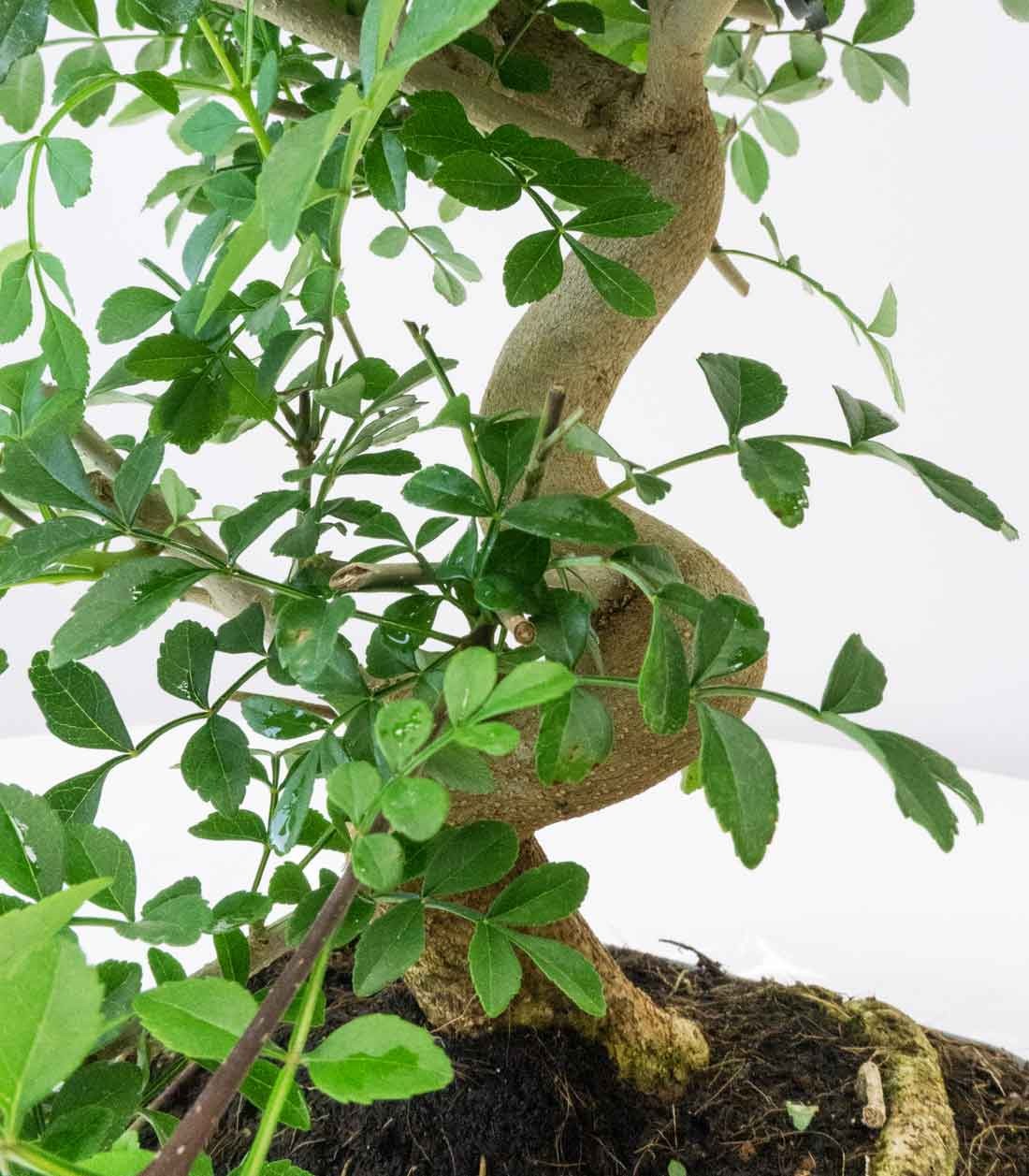
Give it the sunlight, water, nutrition, seasonal temperature changes and root conditions that the species needs. Once the tree is healthy and vigorous, you control its growth through pruning, wiring, root work and container size.
For your ash, I'd particularly emphasize outdoor growing, strong sunlight, excellent drainage, vigorous growth during development, and protecting the root system during extreme weather.
0 commenti :
Post a Comment